
Our school curriculum combines the Global Step Academy international school program and the original SOLTILO sports program for healthy physical and mental development. We aim to have our students acquire English and sports skills as global communication tools.
International Early Years Curriculum

Our curriculum is rooted in the UK-based International Early Years Curriculum (IEYC).
The IEYC was launched in 2016 as the Fieldwork Education International Early Years Curriculum for children aged 2–5 years old. It is used by over 140 nurseries and early year settings, in 60 countries worldwide. The IEYC uses international best practices, holistic enquiry and play-based approaches that cover all curriculum areas including personal, social and emotional development.
Our child-centered approach encourages learning through discovery and exploration, focusing on fun, hands-on learning that is relevant to the children and nurturing their natural curiosity about the world they live in. As well as building solid foundations in literacy and numeracy, children attending GSAIS also participate in a range of special subject classes such as art, dance/hip-hop, physical education and music, all taught in English and part of our regular program. This is because we believe in the importance for children to have a wide variety of experiences in this key stage of their development, engaging them from different angles and encouraging them to grow both as individuals and as members of a group.
Our educational focus is on nurturing students to become inquisitive, well-rounded individuals through the cultivation of their intellectual, creative, personal, social, and physical abilities. We are committed to educating all of our students to be international and independent thinkers. We also focus on academic quality, an understanding of diversity, as well as language learning and communication, ethics, self-awareness and mindfulness. Our ultimate goal is for every student to gain the fundamental skill sets and knowledge to become global citizens and be well prepared to continue their education as such at the elementary school level, whether it will be at an international school or at a local school in Japan or overseas.
SOLTILO
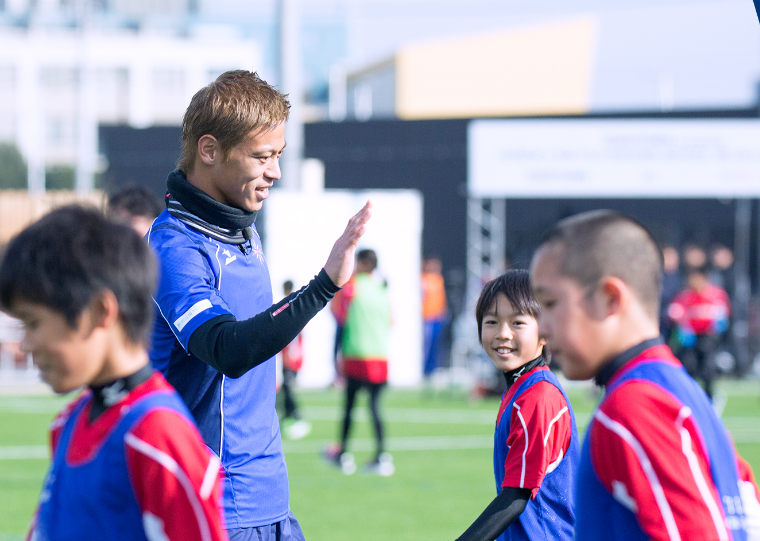
SOLTILO FAMILIA Soccer School was established in 2012 by professional soccer player Keisuke Honda, based on his belief that “through soccer, we can teach the importance of having dreams.” Today, the school operates 61 locations across Japan and 8 overseas, with approximately 4,000 children enrolled (*as of June 2020).
Throughout his career, Honda has experienced both setbacks and success. Through these experiences, he has come to understand the importance of having dreams and believing in oneself. He hopes that children will develop dreams that help them grow stronger and push their limits. To achieve this, the school first aims to share the joy and excitement of physical activity, and when that passion turns into a dream or goal, they are committed to fully supporting each child in achieving it.
Our physical education program is based on the “SOLTILO Curriculum,” developed with input from Honda himself, experienced coaches, and trainers active on the global stage. It focuses not only on improving soccer skills, but also on building fundamental physical abilities, supporting mental development, and helping prevent and manage injuries.
From a developmental perspective, the school views ages 0–6 as a time for “play.” Emphasis is placed on learning through movement and hands-on experience, fostering enjoyment while developing coordination. In particular, the program focuses on improving physical ability through stepwork training and fine ball control.
Jolly Phonics
Our Language Arts program is based on Jolly Phonics.
Jolly Phonics is a comprehensive program, based on the proven, fun and multi-sensory synthetic phonics method that gets children reading and writing from an early age. Jolly Phonics uses the synthetic phonics method, which means that the letter sounds are taught first, on their own, and children are then taught to blend sounds together to say (“synthesize”) the word. When writing a word they identify the sounds and write down the corresponding letters. These skills are called blending and segmenting. This means that we teach letter sounds as opposed to the alphabet.
Students practice phonics, pronunciation, reading, writing and listening by learning songs, actions and stories.
Both stages of Jolly Phonics and Grammar are covered in our main program.
1. Phonics Stage: the letter sounds are taught in a fun, multi-sensory way. Children learn how to use the letter sounds to read and write words.
2. Grammar Stage: the structure of the language is taught. This includes parts of speech, spelling, punctuation, and more. Children learn how to express themselves accurately and well.
Main Subjects
Language Arts
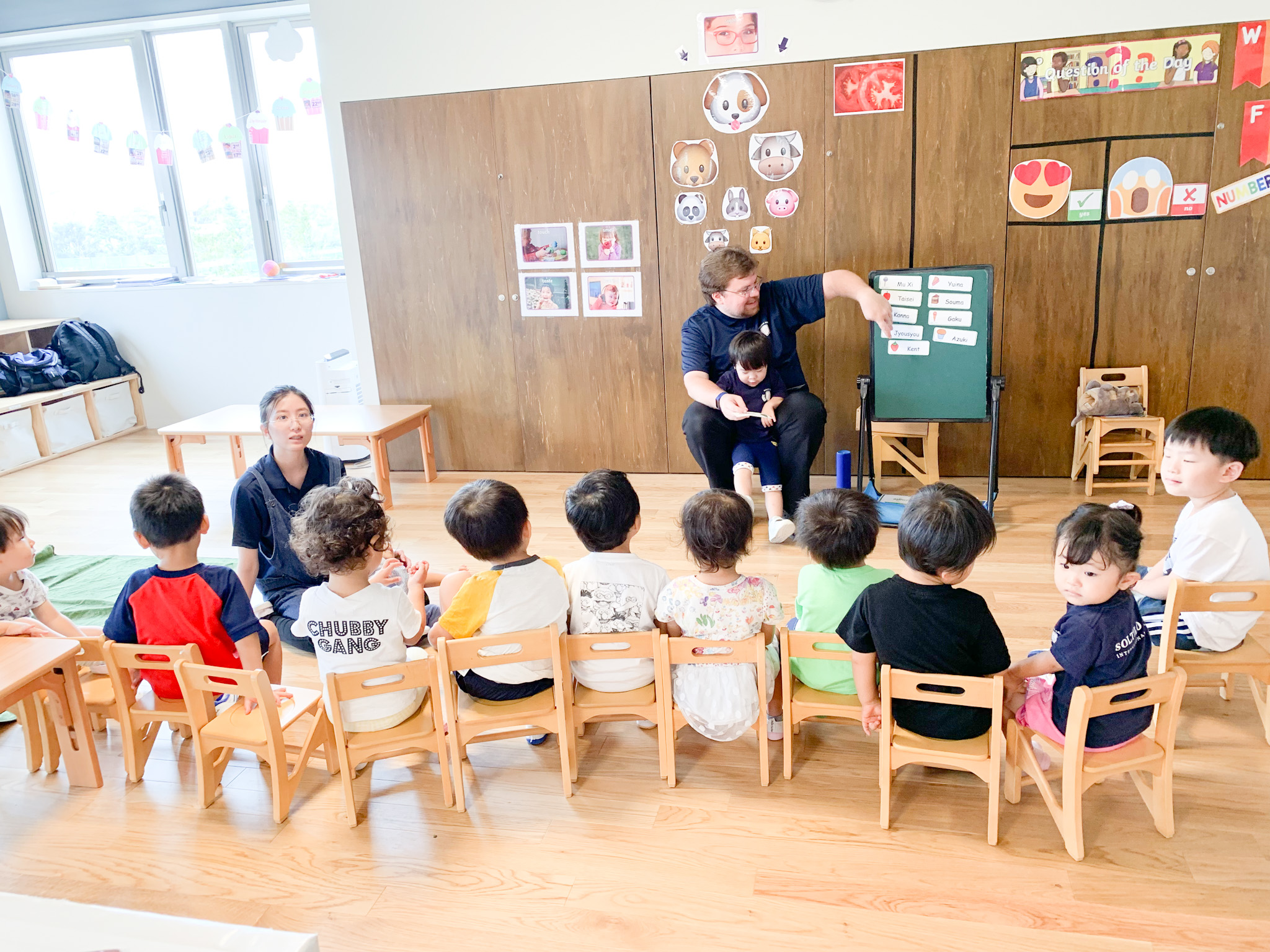
Students practice phonics, pronunciation, reading, writing, and listening on a daily basis, all in a fun way. We believe that learning languages correctly is extremely important to develop communication skills and the ability to understand different cultures. For teaching reading and writing, we are using Jolly Phonics and Grammar. Jolly Phonics is a synthetic phonics method of teaching letter sounds in a way that is fun and multi-sensory, enabling children to become fluent readers. By the time students graduate from K5, they will be able to use phonics to read unfamiliar words, and read and write simple sentences.
Mathematics
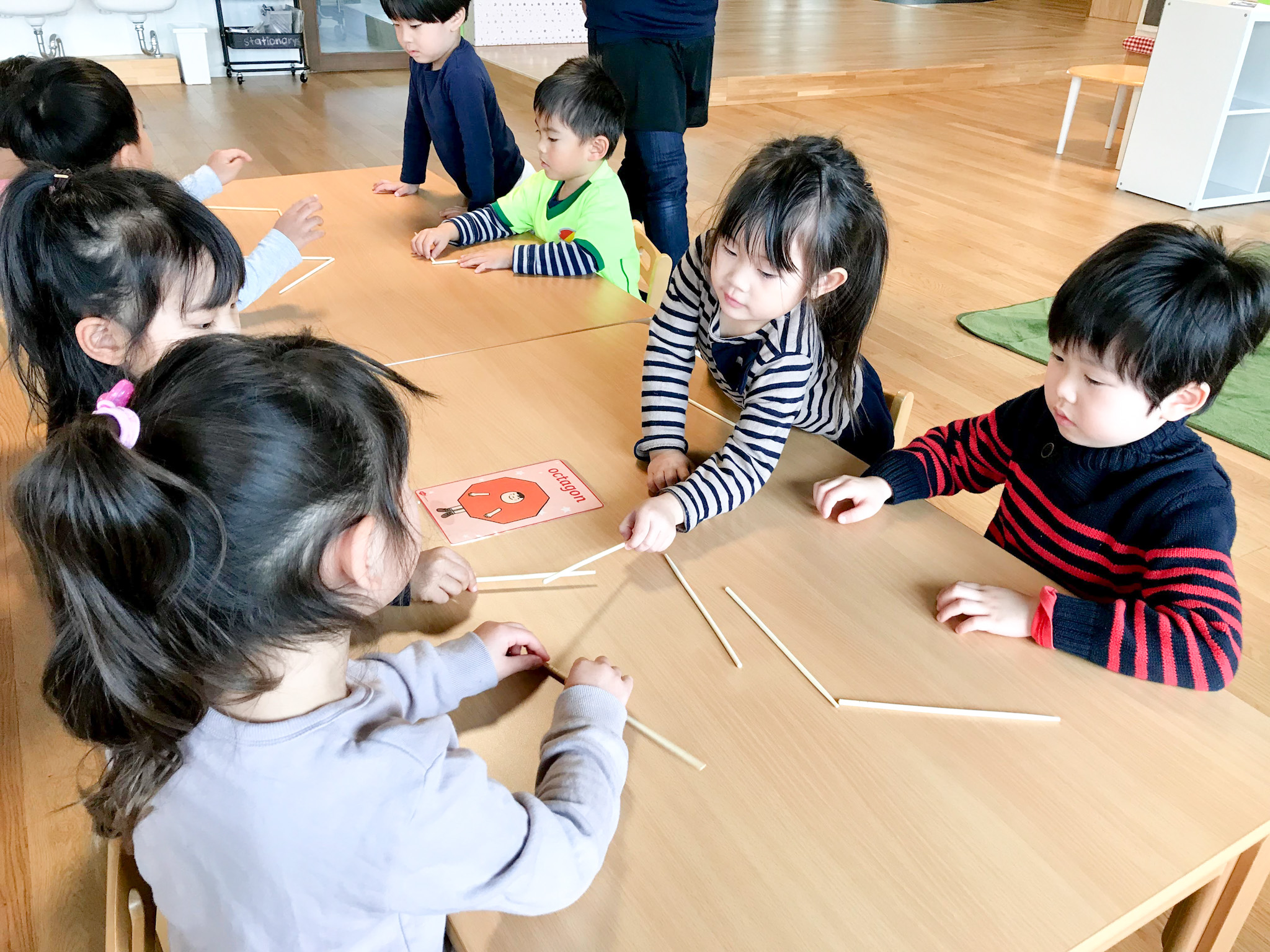
In Math, students use hands-on manipulative materials, play games, and engage in multi-sensory activities to develop number sense and link mathematical concepts to their daily lives and experiences. Children will start familiarizing themselves with numbers and counting in Preschool, where they will also learn to group objects by shape, size, and color. As the students progress through K3, K4, and K5, they will be exploring graphing, bidimensional and tridimensional shapes, patterning, measurement, ordinal numbers and number words, two-digit additions, simple subtractions, story problems, and time and calendar concepts.
Science & Social Studies
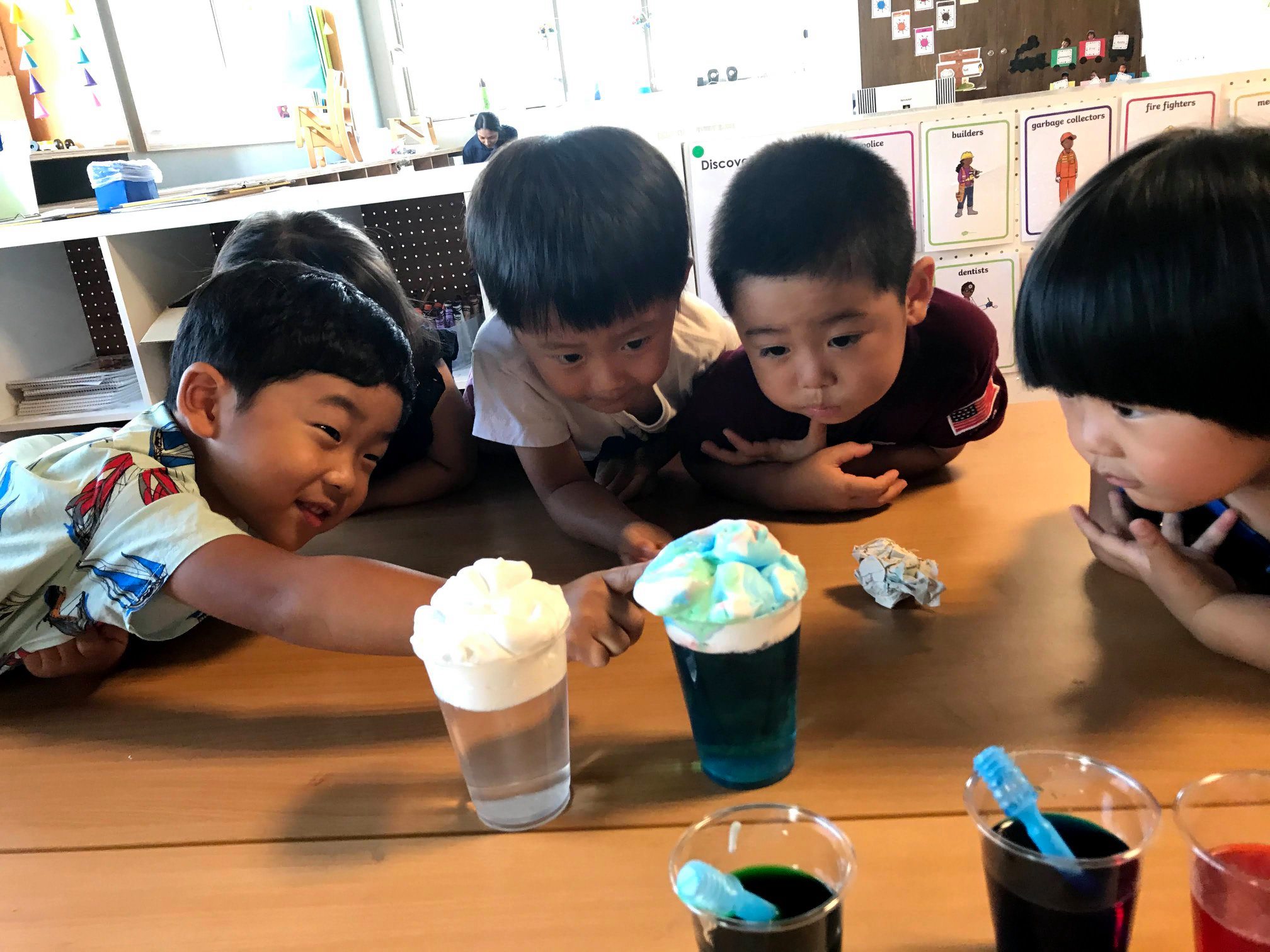
We adopt a theme-based approach for our Science and Social Studies curriculum. The themes are the same from K3 to K5, although lessons will be differentiated in difficulty depending on the children’s age group. A school-wide party and field trip, which are related to each learning theme are scheduled to enhance retention of the learned concepts.
Arts & Crafts
In Art, we offer a well-balanced variety of lessons covering both painting and crafts. We give importance to the children enjoying expressing themselves creatively through art, and value the uniqueness of each child’s creations. Art and crafts will also follow the monthly themes, taking inspiration from what the children are learning in Science and Social Studies as well as from the observation of nature.
Japanese
In Japanese, students learn how to write Japanese letters (Hiragana and Katakana) as well as learn about Japanese culture and seasonal traditions throughout the year. The Japanese teacher will read Japanese books and teach the students Japanese songs. We will also be making crafts related to Japanese culture and events. We use both Japanese and English when reading books so that children who are learning Japanese as their second language can assimilate Japanese vocabulary more effectively.
Music
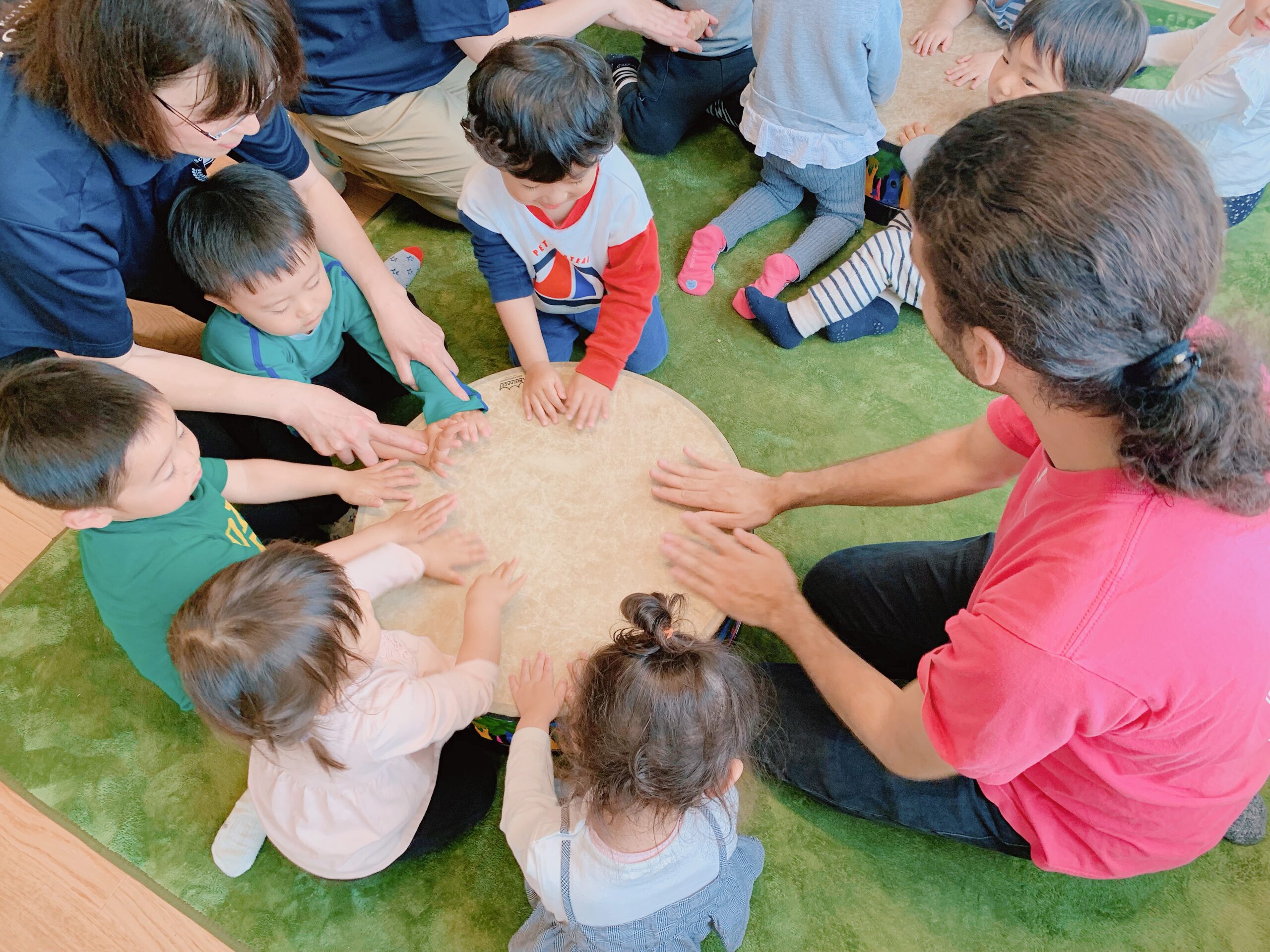
During music classes, students will use songs and instruments to learn musical notes and their values and recognize and reproduce rhythm patterns. We will start with simple instruments such as handbells, castanets, and shakers for PRE-K and K3, while K4 and K5 students will focus on keyboards, using singing as a guide as they play.
Dance (ダンス)
Children practice different dance styles, such as ballet, hip-hop, and jazz, while preparing for the annual events and presentations.
Park Time
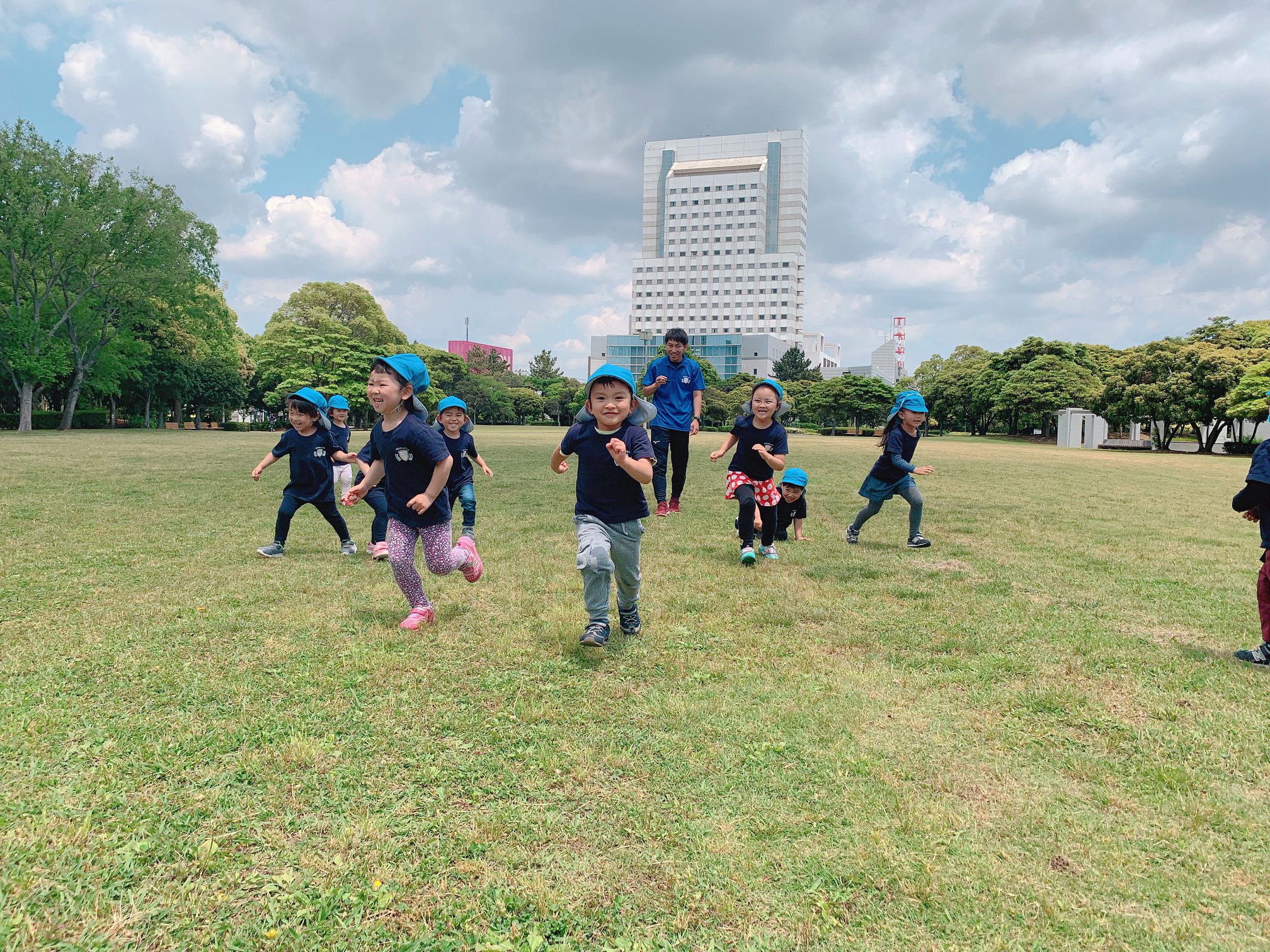
Outdoor playtime is an important part of our schedule. We regularly take the children to the nearby park, where we will play ball games, run and splash around in summer.
Field Trips and Special Activities
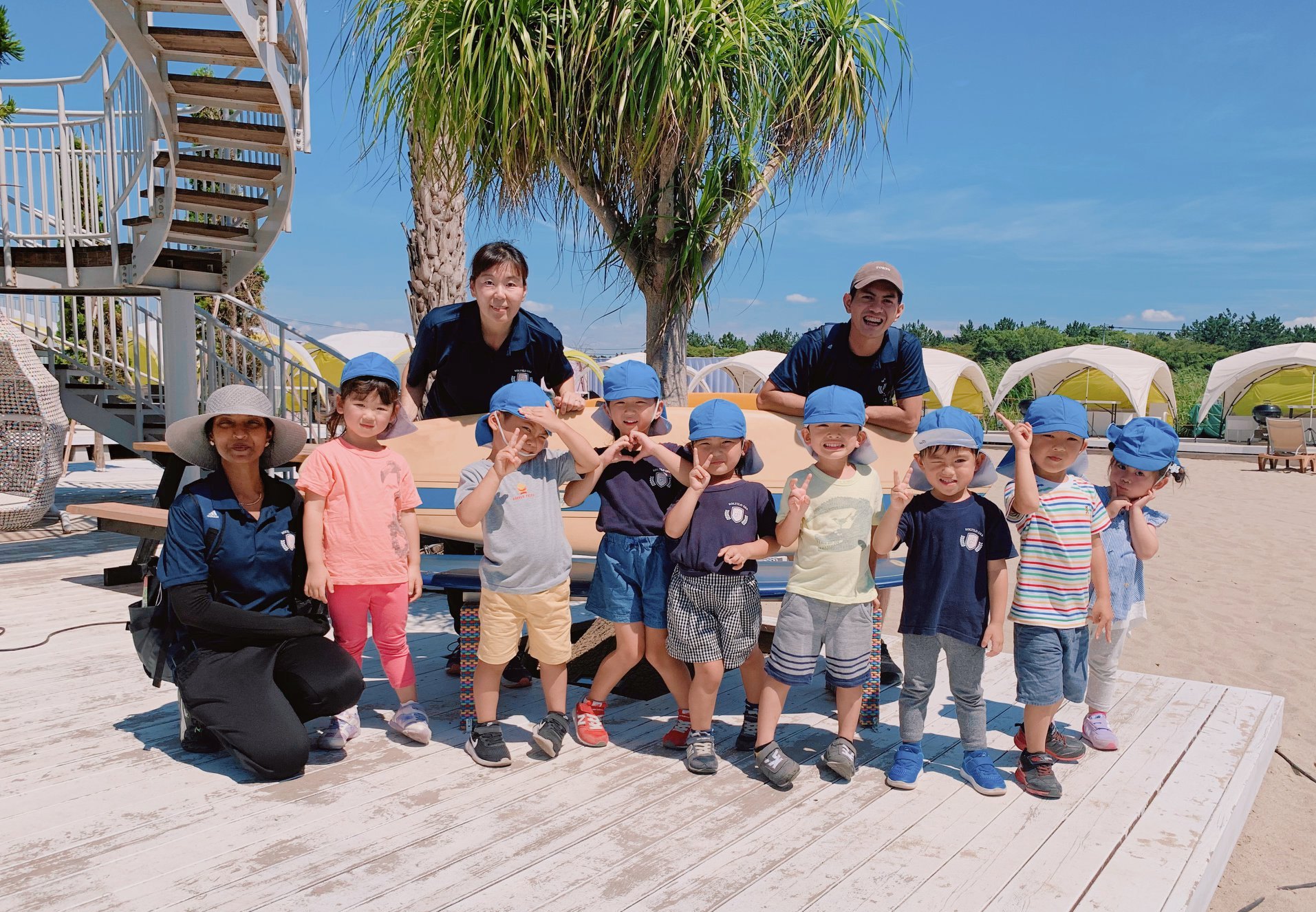
To enrich the students’ learning, we will go on field trips according to the curriculum themes. In addition to full-day field trips, the students will also have the chance to participate in half-day activities in the school’s surroundings, such as potato digging, visiting the neighborhood fire station, or having exchange playdates with other schools nearby.
Global Step Academy is the first school group and organization headquartered in Japan to earn Cognia® Systems Accreditation. Cognia is a nonprofit organization that recognizes schools and districts across the globe that meet rigorous standards focused on productive learning environments, equitable resource allocation, and effective leadership.
To earn Cognia Systems Accreditation, a school district must submit to internal and external review. Earning accreditation from the Cognia Global Accreditation Commission means that the school system meets Cognia Performance Standards and maintains a commitment to continuous improvement.